

Germany Exits Its Longest Post-Reunification Slump as Chancellor Merz Announces Return to Growth
BERLIN — Germany's economy is expanding once again after three straight years of contraction, Chancellor Friedrich Merz announced, hailing the development as a long-awaited turning
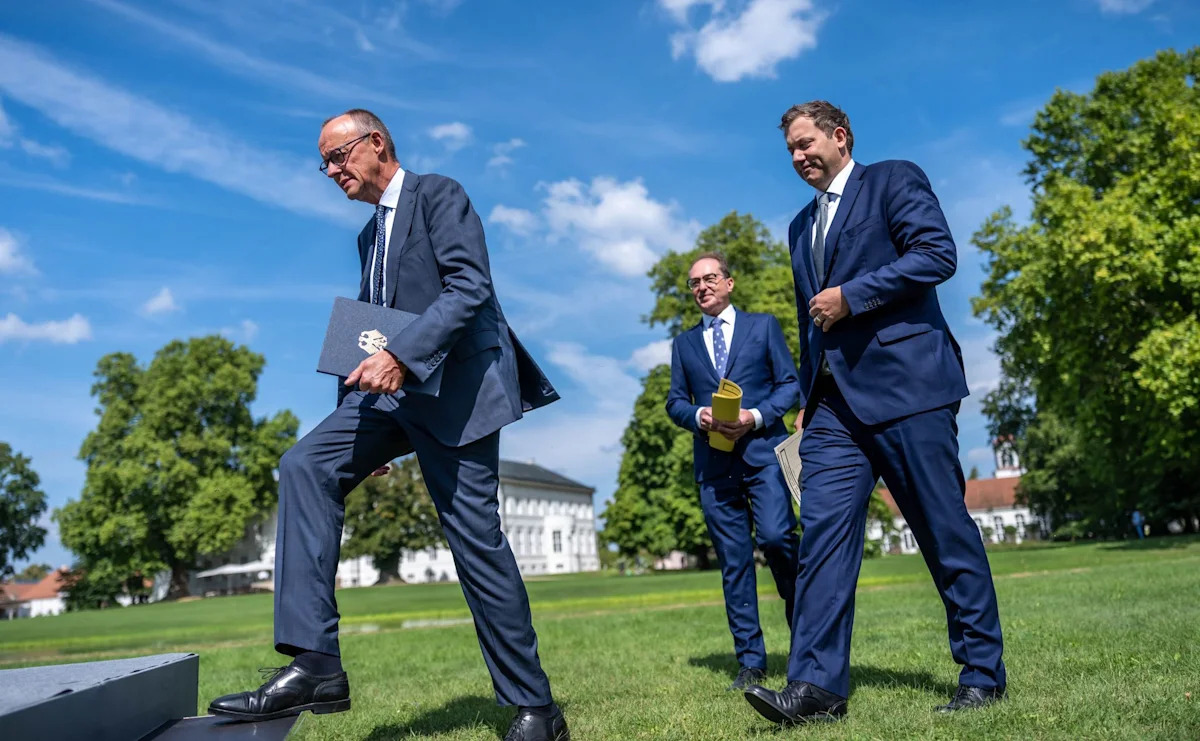
BERLIN — Germany's economy is expanding once again after three straight years of contraction, Chancellor Friedrich Merz announced, hailing the development as a long-awaited turning point for Europe's largest economy. The declaration marks the first time since 2022 that Berlin has been able to describe national output as growing rather than shrinking, closing one of the bleakest chapters in the country's recent economic history.
The scale of the turnaround becomes clear when set against the record of recent years. Gross domestic product fell by 0.3 percent in 2023 and slipped a further 0.2 percent in 2024, the first back-to-back annual contractions in more than two decades, before weakening yet again to extend the downturn into a third year. For an economy that long served as the industrial engine of the European Union, the slide amounted to a slump without parallel in the post-reunification era.
Merz presented the renewed growth as vindication of his government's push to revive investment and restore confidence in the business community. Since taking office in May 2025, the chancellor has argued that Germany's problems were self-inflicted as much as external, and that decisive policy changes could pull the country out of stagnation.
The roots of the downturn run deep. Russia's cutoff of cheap natural gas following its full-scale invasion of Ukraine left German industry facing energy bills far above those of competitors in the United States and Asia. At the same time, the country's flagship automakers were squeezed by the costly transition to electric vehicles and intensifying competition from Chinese manufacturers, while exporters absorbed the blow of new American tariffs.
Berlin's policy response gathered pace through 2025. Lawmakers cleared a sweeping fiscal package that relaxed Germany's constitutionally enshrined debt brake for defense spending and created a special infrastructure fund worth hundreds of billions of euros over more than a decade, earmarked for crumbling bridges, railways and schools. The governing coalition has also introduced tax incentives for corporate investment and promised to slash bureaucratic burdens that firms complain have stifled innovation.
Economists, however, urge caution. A return to headline growth does not erase the structural damage accumulated during the slump. Unemployment has edged upward as struggling factories shed workers, industrial production remains below pre-pandemic levels, and uncertainty over international trade policy continues to cloud the outlook for export-dependent sectors that anchor German prosperity.
The stakes extend well beyond Germany's borders. Years of German stagnation acted as a persistent drag on the wider eurozone, and a sustained revival would send demand rippling through supply chains across the region, benefiting component suppliers and trading partners from France and Italy to Poland and the Czech Republic. A stronger German economy could also reshape expectations about the interest rate path at the European Central Bank.
For Merz personally, the announcement carries heavy political weight. His coalition has faced relentless pressure over budget priorities, while the rise of populist parties in regions hollowed out by industrial decline has underscored the cost of economic malaise. Delivering a durable recovery is widely seen as central to the chancellor's credibility heading into the remainder of his term.
Formidable challenges nonetheless loom. Germany must contend with an aging workforce, lagging digitalization, the mounting expense of continental defense and the enormous costs of decarbonizing its industrial base — pressures that will strain public finances for years to come regardless of the current upswing.
Whether the recovery proves durable will depend on execution: translating borrowed funds into visible infrastructure, easing energy costs and navigating trade frictions. For now, though, the chancellor and his government are savoring a word they have rarely been able to use over the past three years — growth.
--- END ---
What's Your Reaction?
 Like
0
 Dislike
0
 Love
0
 Funny
0
 Wow
0
 Sad
0
 Angry
0

Reporter Startup. Meliput ekosistem startup Indonesia, venture capital, dan unicorn.


Comments (0)