

Rescuers recover 22 bodies, nearly 400 people unaccounted for after deadly flash flood strikes Nepal-Tibet border
Rescue teams working along the Nepal-China border have recovered at least 22 bodies following a catastrophic flash flood that tore through communities on both sides of the frontier
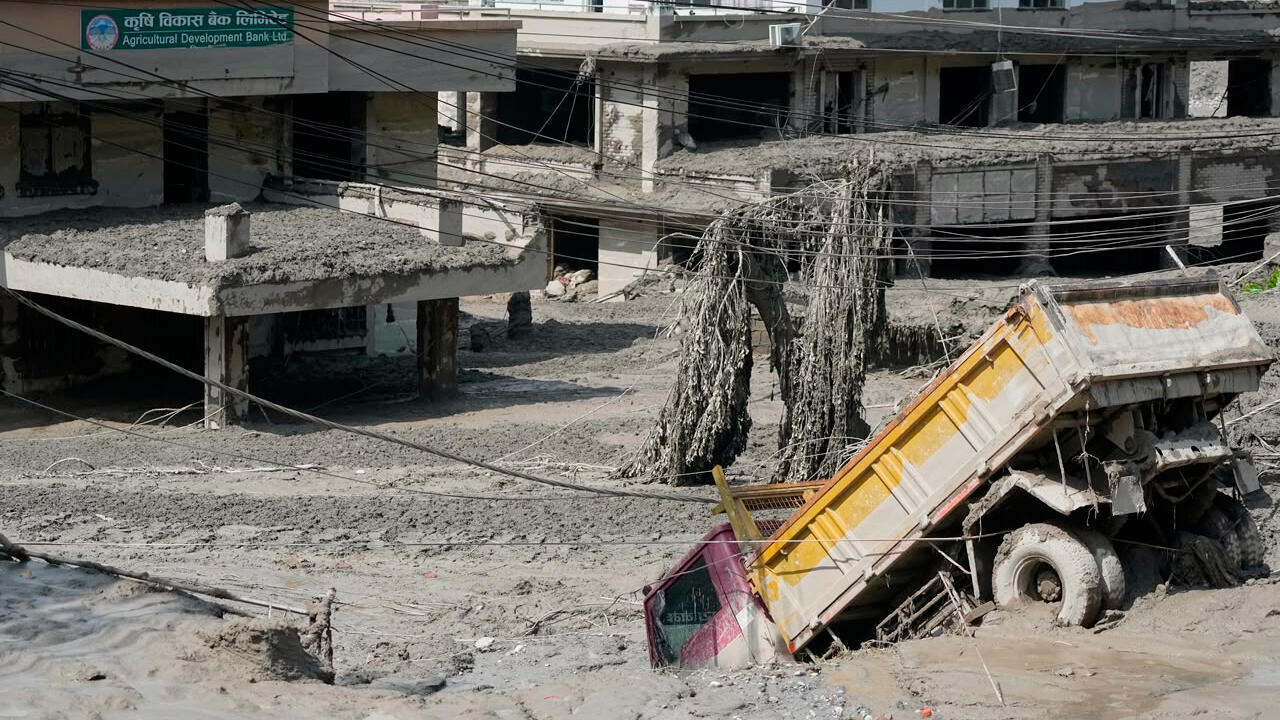
Rescue teams working along the Nepal-China border have recovered at least 22 bodies following a catastrophic flash flood that tore through communities on both sides of the frontier, while 384 people remain listed as missing, officials confirmed on Wednesday.
Among those unaccounted for are hundreds of foreign visitors. Nepali authorities said 384 tourists had vanished in the disaster, with 291 of them believed to come from abroad — including nationals of India, the United States, the United Kingdom and Malaysia.
The devastation was not confined to the Nepalese slope of the Himalayas. Chinese state broadcaster CCTV reported that a mudslide originating in Nepal had caused significant loss of life and left many people missing at Gyirong Port, a crossing point on the Tibetan side of the boundary.
Footage aired by the Chinese network, which AFP could not independently confirm, captured torrents of muddy water surging downhill, sweeping up tree limbs and rubble and submerging a roadway.
The disaster unfolded around 9 a.m. local time on Wednesday, when the Bhotekoshi River suddenly burst into violent floodwaters. Officials said the deluge wiped out several mountain villages, along with stretches of highway and multiple hydropower installations in its path.
Authorities responded by issuing alerts across a number of districts, urging residents to keep well clear of the waterways most at risk: the Bhotekoshi, the Trishuli and the Narayani rivers.
Nepal's government has also reached out to its neighbours. "We have asked both India and China to help us with the rescue efforts," said Sasmit Pokharel, a spokesperson for the Nepali government, underscoring the scale of an operation that local resources alone may struggle to manage.
Rasuwa district bore the brunt of the flooding, and the area is tragically familiar with such events. In August of last year, a glacial lake sitting just over the border in Tibet overflowed amid unusually high temperatures in the mountains, killing nine people and wrecking vital infrastructure, among them a bridge that links the two countries.
Experts believe Wednesday's catastrophe followed a similar pattern. Climate scientists at the Kathmandu-based International Centre for Integrated Mountain Development say an avalanche off a glacier was most likely the trigger.
According to the centre, the Lhende Khola River — a tributary of the Bhotekoshi — experienced the most extreme flooding during the event. Saswata Sanyal, a specialist in disaster risk reduction at the research organisation, said the river has now been hit twice within fourteen months. He explained that this latest surge began when an avalanche of rock and ice from a glacier on the Nepalese side dammed the river, allowing water to build up before bursting loose in a sudden downstream wave. Early warning systems, he argued, represent the frontline defence for communities living in a heating Himalayan landscape.
The wider region remains acutely exposed to such disasters. Scientists note that the Himalayas are warming more rapidly than the planet as a whole because of human-driven climate change, leaving the mountain belt — which spans Nepal, India and neighbouring nations — especially susceptible to torrential rains, flooding and landslides. Studies indicate that heatwaves, intense downpours and retreating glaciers are all becoming increasingly common across the area.
That warning is backed by hard data. Researchers in Kathmandu reported earlier this year that glaciers throughout the Hindu Kush Himalaya range are losing ice faster than ever recorded, with the rate of ice loss doubling since the turn of the century — a trend driven chiefly by rising global temperatures.
--- END ---
What's Your Reaction?
 Like
0
 Dislike
0
 Love
0
 Funny
0
 Wow
0
 Sad
0
 Angry
0

Reporter Startup. Meliput ekosistem startup Indonesia, venture capital, dan unicorn.


Comments (0)