

US Military Conducts Strike on Iranian Rocket Launchers in Strait of Hormuz
Content: The United States military has carried out an airstrike against Iranian rocket launchers situated on Larak island within the strategic Strait of Hormuz, marking the fi
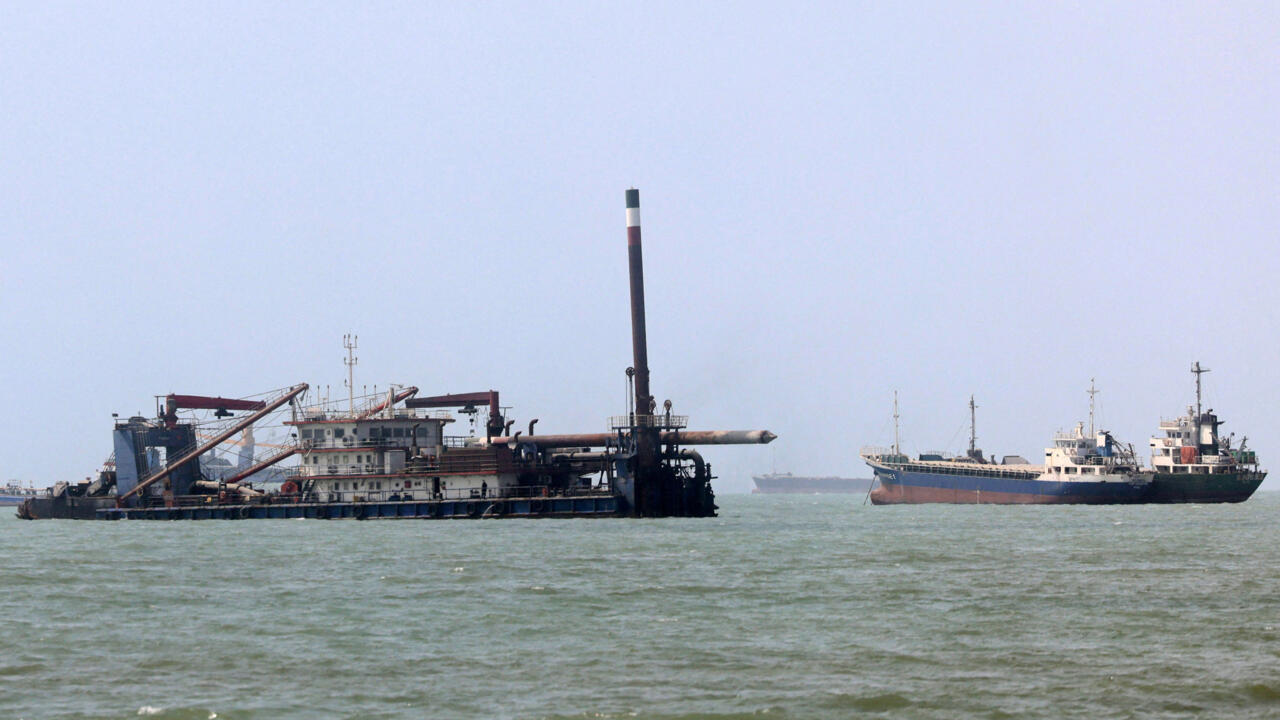
The United States military has carried out an airstrike against Iranian rocket launchers situated on Larak island within the strategic Strait of Hormuz, marking the first such military action in a month. This operation, which was confirmed by a US official, has raised tensions in the region following a series of recent incidents involving maritime traffic in the vital waterway.
Iran's Revolutionary Guards have reported that the attack on Larak island resulted in the death and injury of several Iranian fighters and civilians. In a statement carried by the state broadcaster IRIB, the Guards vowed to respond to the attack, warning that it would lead to "punishment of the aggressor." While the Revolutionary Guards did not provide a precise number of casualties, the attack is expected to exacerbate already strained relations between the two nations.
The strike came on the heels of an incident where a tanker was struck by an unknown projectile while transiting through the Strait of Hormuz. The United Kingdom Maritime Trade Operations agency (UKMTO) reported the incident, which occurred 12 nautical miles north of Oman's Khasab. Thankfully, there were no reported casualties or environmental impact as a result of this attack.
The strategic location of the Strait of Hormuz makes it a flashpoint for international concern, as it serves as a critical shipping route for oil exports from the Middle East. The US military's action follows months of increasing tensions in the region, including threats of naval blockades and acts of sabotage against shipping lanes.
The latest airstrike is not the first military engagement between the US and Iran in the area. In the past, both nations have engaged in various military confrontations, with the US often conducting targeted strikes against Iranian assets in response to perceived threats.
The attack on Larak island has drawn a strong reaction from Iran, which has accused the US of provoking a confrontation. Iran's Revolutionary Guards have vowed to retaliate, potentially raising the risk of further escalation in the region. As a result, international observers are closely monitoring the situation, concerned that the latest strike could lead to a wider conflict.
Despite the tensions, some experts believe that both nations have incentives to avoid a full-blown conflict. For Iran, maintaining stability in the Strait of Hormuz is crucial for its economic survival, as it relies heavily on oil exports. The US, on the other hand, has strategic interests in the region and a vested interest in preventing Iran from obtaining nuclear weapons.
As the situation unfolds, the international community will be watching closely to see how the latest strike impacts the broader Middle East landscape. With Iran's vow to respond and the potential for further military action, the risk of an unintended escalation remains a significant concern.
In the wake of the airstrike, calls for dialogue and diplomatic efforts to ease tensions have grown louder. While the US and Iran have historically struggled to engage in meaningful negotiations, the stakes in the Strait of Hormuz may compel both nations to pursue a path toward resolution.
The US military's action on Larak island is a stark reminder of the ongoing tensions in the region. As the situation continues to evolve, the world watches to see whether this incident will serve as a catalyst for further conflict or a step towards a more peaceful resolution.
What's Your Reaction?
 Like
0
 Dislike
0
 Love
0
 Funny
0
 Wow
0
 Sad
0
 Angry
0

Editor Teknologi. Mantan software engineer. Meliput AI, cloud, dan transformasi digital.


Comments (0)